
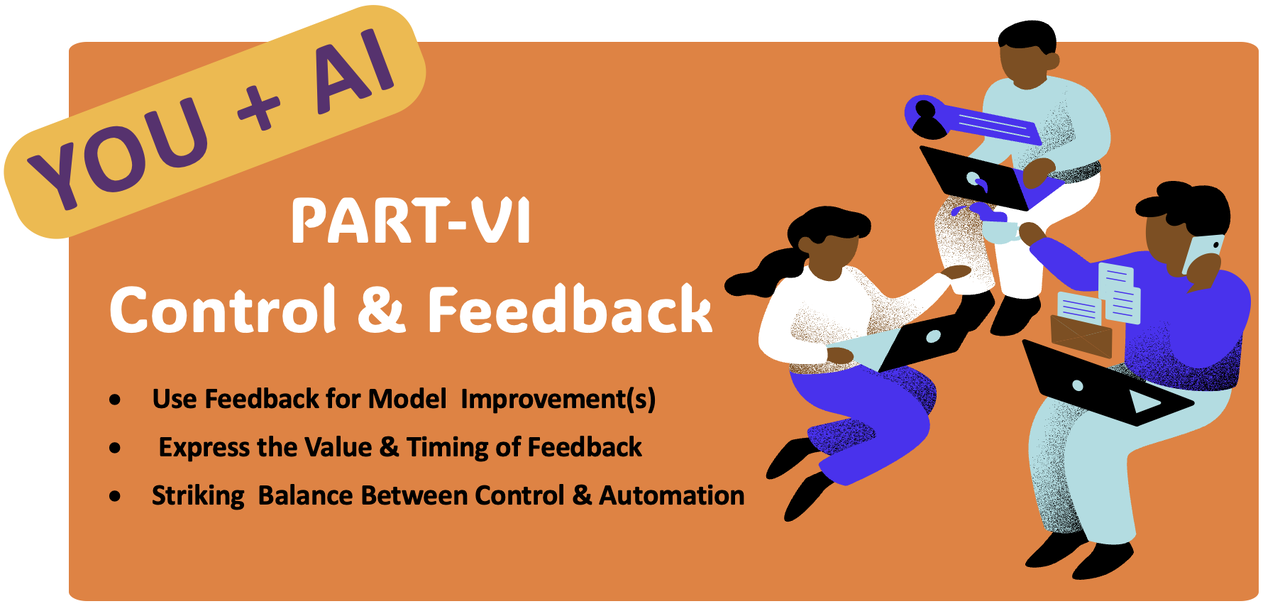
When it comes to AI products, getting feedback from users and giving them control is super important. It directly makes the AI model better and improves how users experience the product. Letting users share their thoughts helps them make the product fit their needs better, making it more valuable for them. Also, when users have control, they trust the AI system more.
Using feedback effectively makes products scalable and opens new avenues for continuous improvement It helps improve technology, make content more personal, and overall, make the experience for users better.
Here are key considerations for incorporating feedback and control mechanisms in AI product development, with examples and industry best practices:
Use Feedback for Model Improvement
When collecting feedback, there are two types: implicit and explicit.
Explicit and implicit feedback play distinct roles in refining AI models. Explicit feedback involves direct input from users, such as ratings or comments, while implicit feedback is inferred from user behavior.
It’s important to be clear with users about what information we’re gathering, why we’re collecting it, and how it helps them. Whenever we can, let’s use the feedback to make our AI better.
Example: A music streaming service could gather explicit feedback through user ratings and implicit feedback by analyzing listening patterns.
As Best Practice, Regularly analyze feedback data to identify patterns and align model updates accordingly.
Communicate Value & Time to Impact
Encouraging users to invest their time in providing feedback requires ensuring that the process is both valuable and impactful. The effectiveness of this encouragement hinges on how well you communicate the benefits of giving feedback, as it directly influences whether users will actively participate.
Understanding the motivation behind user feedback is crucial for managing expectations regarding the time it takes for improvements to manifest.
Example: A language translation app can communicate that user feedback on translation accuracy will lead to more precise language interpretations in subsequent updates.
As Best Practice, Implement clear communication channels, informing users about the impact their feedback can have on the product and setting realistic expectations.
Balance Control & Automation
For AI-powered products, it’s always perceived that the best ones are those that do a job automatically instead of people doing it themselves.
For instance, think about a music app that can create playlists with a theme something like “ Best 90’s Dance Hits”. This way, users don’t need to spend time choosing artists, listening to songs, deciding, and then making a playlist
However what the user actually wants is “Dance Hits from 90’s to 2023”.
There are times when people like to be in charge of a task or process, whether it involves AI or not.
Striking a balance between user control and automated processes is essential for creating a harmonious user experience.
Example: An AI-driven recommendation system could provide users with options to customize preferences while still utilizing machine learning algorithms for personalized suggestions.
As Best Practice, Develop intuitive interfaces that allow users to easily exercise control over their AI-driven experiences, respecting privacy concerns and offering straightforward opt-out mechanisms.
Following these careful considerations is vital for making AI products that work well with user feedback and control features.
This approach ensures that the products are not just technically strong but also match closely with what users expect and like.
By focusing on getting users involved, explaining things clearly, and finding the right balance between user control and automation, developers can create AI products that not only meet technical standards but also connect well with users, building trust and satisfaction










Leave a Reply