
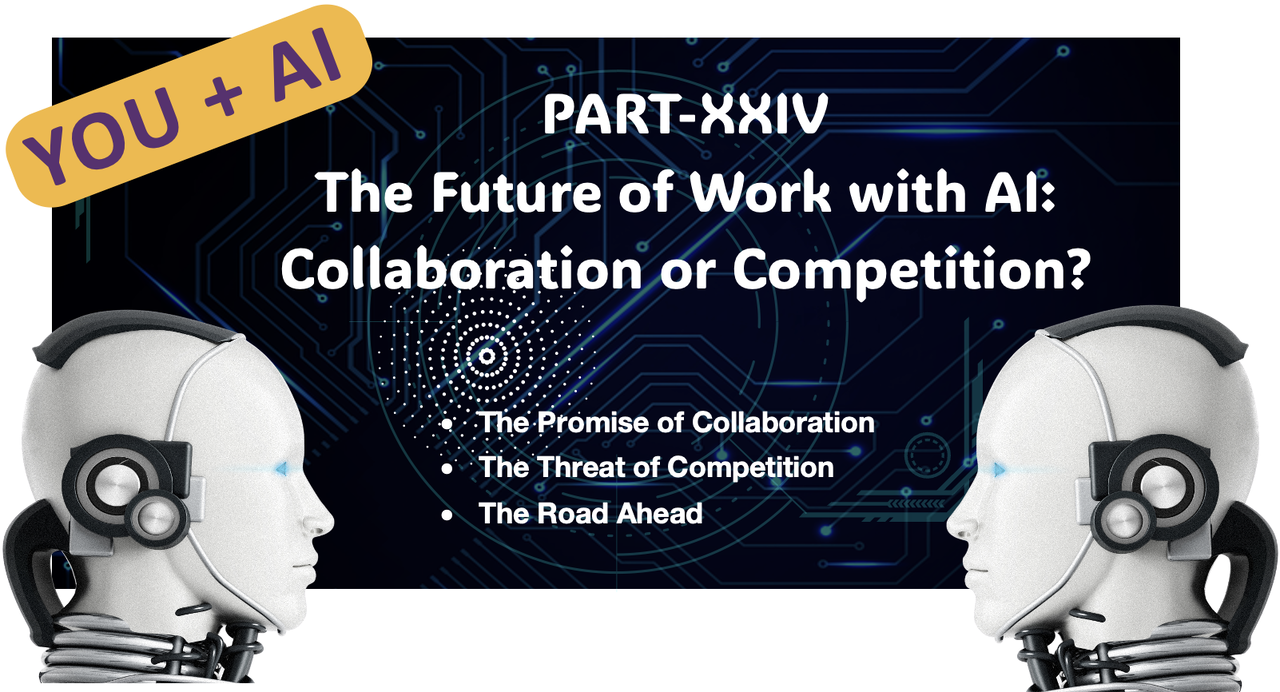
As AI technologies continue to advance, the question arises: will AI be a collaborator, augmenting human capabilities, or a competitor, replacing human labor? This article delves into the future of work with AI, exploring whether it will foster collaboration or intensify competition, backed by real-world cases and expert predictions.
However, a growing chorus of experts believe AI’s impact will be more nuanced. Rather than replacing human workers altogether, AI is more likely to augment our capabilities.
Here’s why:
- Limited AI Scope: Current AI excels at specific tasks, but it lacks the human ability for broad-based problem-solving, critical thinking, and creativity. For instance, an AI-powered radiology assistant can analyze X-rays with impressive accuracy, but it cannot diagnose a patient or determine the best course of treatment – that requires the expertise of a human doctor.
- Human-AI Synergy: Imagine a team where AI handles data analysis and report generation, freeing up doctors to focus on patient interaction and complex diagnoses. This collaboration can lead to more efficient and effective healthcare delivery.
- New Opportunities: AI is also creating entirely new job categories. Data scientists, AI ethicists, and cybersecurity specialists are just a few examples. The World Economic Forum estimates that by 2030, AI could create up to 97 million new jobs globally.
The Promise of Collaboration:
AI holds immense potential to collaborate with humans, augmenting their capabilities and improving productivity across various sectors. Here are some examples:
Healthcare: AI-powered diagnostic tools assist medical professionals in analyzing complex data, leading to more accurate diagnoses and personalized treatment plans. For instance, IBM’s Watson for Oncology analyzes patient data and medical literature to recommend cancer treatment options, collaborating with oncologists to deliver better patient outcomes.
Customer Service: Chatbots equipped with natural language processing (NLP) capabilities handle routine customer inquiries, freeing human agents to focus on more complex issues. Companies like Bank of America and Amtrak utilize AI chatbots to provide instant support and enhance customer satisfaction.
Education: AI-driven personalized learning platforms adapt to students’ individual needs, providing tailored learning experiences and improving educational outcomes. Duolingo, for instance, employs AI algorithms to customize language learning paths for users, collaborating with learners to achieve their language proficiency goals.
Manufacturing: Collaborative robots, or cobots, work alongside human workers on factory floors, increasing efficiency and safety. Companies like BMW and Adidas use cobots for tasks such as assembly and quality control, augmenting human labor rather than replacing it.
Real World Collaboration:
Several companies are already demonstrating the power of human-AI collaboration:
- Ford Motors: Ford utilizes AI-powered robots on assembly lines to perform physically demanding tasks, allowing human workers to focus on quality control and complex problem-solving.
- Hilton Hotels: Hilton’s “Connie” robot assists housekeeping staff, delivering towels and amenities, freeing up human workers for more personalized guest interactions.
- JPMorgan Chase: JPMorgan utilizes AI-powered tools to automate tasks such as loan processing and fraud detection, allowing human employees to focus on complex financial analysis and client relationships.
The Threat of Competition:
Despite its collaborative potential, AI also poses challenges, potentially leading to job displacement and heightened competition. Here are examples illustrating this aspect:
Retail: Automated checkout systems and AI-powered inventory management solutions reduce the need for human cashiers and stock clerks. Amazon Go stores, which feature cashierless checkout technology, demonstrate how AI can streamline retail operations while minimizing human involvement.
Transportation: Self-driving vehicles powered by AI threaten jobs in the transportation sector, including truck driving and taxi services. Companies like Tesla and Waymo are investing heavily in autonomous vehicle technology, potentially disrupting the livelihoods of millions of drivers worldwide.
Finance: AI algorithms handle tasks such as algorithmic trading and risk assessment in the finance industry, diminishing the demand for human traders and analysts. High-frequency trading firms like Renaissance Technologies leverage AI to make split-second trading decisions, often outperforming human traders.
Legal Services: AI-powered legal research tools sift through vast amounts of case law and precedents, reducing the need for junior lawyers to perform manual document review. Platforms like ROSS Intelligence and Lex Machina enable law firms to streamline their workflows and deliver legal services more efficiently.
Expert Predictions:
Industry experts offer diverse perspectives on the future of work with AI:
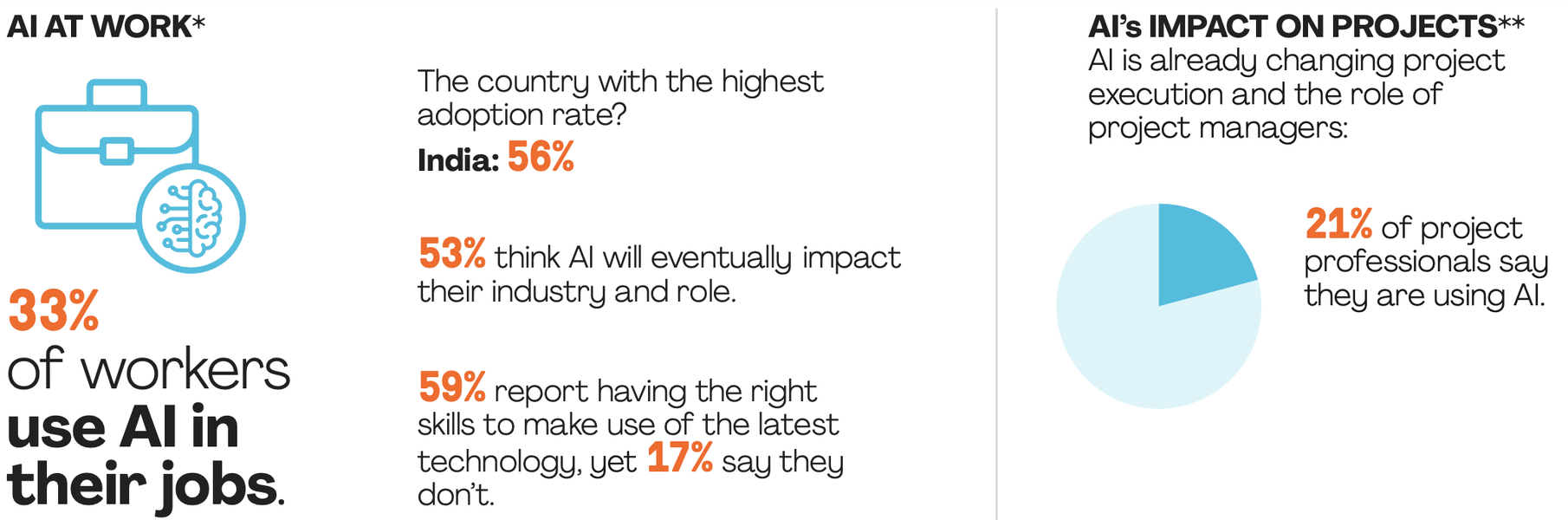
- Gartner predicts that by 2025, one in every three jobs will be transformed by AI, creating new roles while displacing others.
- McKinsey estimates that up to 800 million jobs could be automated globally by 2030, necessitating widespread upskilling and reskilling efforts.
- The World Economic Forum suggests that AI will lead to a “double disruption” in the labor market, with some jobs disappearing while others emerge, requiring different skill sets.
The Road Ahead
The future of work with AI will likely be a story of collaboration, not competition. However, navigating this transition will require proactive measures from both individuals and organizations:
- Lifelong Learning: Embracing a growth mindset and continuous learning will be essential for workers to remain relevant in the evolving job market.
- Reskilling and Upskilling Programs: Organizations can help their employees bridge the skills gap by offering training programs focused on AI and emerging technologies.
- Ethical Considerations: As AI becomes more integrated into the workplace, ethical considerations like bias and transparency need to be addressed to ensure a fair and equitable work environment.
The future of work with AI presents both opportunities and challenges. While AI has the potential to collaborate with humans, enhancing productivity and innovation, it also poses threats of job displacement and heightened competition. To navigate this landscape successfully, individuals and organizations must embrace lifelong learning, adaptability, and proactive strategies for leveraging AI technologies. By fostering a symbiotic relationship between humans and AI, we can shape a future where collaboration triumphs
By embracing collaboration, continuous learning, and ethical considerations, we can ensure that AI becomes a powerful tool for human progress, not a threat to our jobs.




Leave a Reply