You+AI: Part XVIII: Dynamic Pricing & Product Recommendations

Dynamic pricing, the practice of adjusting prices in real-time based on various factors such as demand, competition, and market conditions, has been around for decades. One of the key advantages of AI-based dynamic pricing is its ability to personalize prices for individual customers. By leveraging data on past purchases, browsing history, demographics, and even psychographic profiles, retailers can tailor prices to match each customer’s willingness to pay. This not only maximizes revenue but also enhances customer satisfaction by offering fair and personalized pricing.

AI-based product recommendations are not limited to just online channels, retailers can seamlessly integrate AI-powered recommendations across various touchpoints, including websites, mobile apps, email campaigns, and even in-store displays. This omnichannel approach ensures a consistent and personalized shopping experience across all channels, thereby maximizing customer engagement and loy

Top AI-based Dynamic Pricing & Product Recommendations tools

Prisync (Dynamic Pricing)

  • Key Features: Real-time competitor price tracking and automatic price adjustments based on market conditions, demand signals, and competitor behavior.
  • Benefits: Increased revenue and profitability, improved competitive advantage, reduced manual pricing tasks.
  • Considerations: Requires accurate product data and integration with your e-commerce platform.

Pricefx (Dynamic Pricing)

  • Key Features: Advanced pricing algorithms, AI-driven demand forecasting, and customer segmentation for personalized pricing strategies.
  • Benefits: Optimized pricing across channels, improved conversion rates, increased customer satisfaction.
  • Considerations: Complex software requiring technical expertise, high pricing for enterprise-level features.

Zilliant (Dynamic Pricing)

  • Key Features: Machine learning-based price optimization, profit maximization algorithms, and dynamic bundling capabilities.
  • Benefits: Improved margins, increased sales volume, data-driven pricing decisions.
  • Considerations: Primarily focused on B2B pricing, high implementation costs.

Rebuy (Product Recommendations)

  • Key Features: AI-powered product recommendations based on user behavior, purchase history, and browsing activity.
  • Benefits: Increased customer engagement, improved conversion rates, personalized shopping experiences.
  • Considerations: Requires integration with e-commerce platform and customer data, may require customization for specific needs.

Twilio Segment (Product Recommendations)

  • Key Features: Real-time product recommendations across multiple channels, including email, SMS, and website pop-ups.
  • Benefits: Personalized marketing campaigns, increased customer lifetime value, improved cross-selling and upselling opportunities.
  • Considerations: Requires integration with CRM and marketing automation platforms, may require technical expertise.

.Coveo Personalized Recommendations (Product Recommendations)

  • Key Features: AI-powered product recommendations for search results, content pages, and email marketing campaigns.
  • Benefits: Improved website navigation, increased click-through rates, enhanced customer engagement.
  • Considerations: Requires integration with website platform and content management system, may require customization for specific needs.

Oracle CX Recommendations (Product Recommendations)

  • Key Features: AI-powered product recommendations across various Oracle CX solutions, including marketing automation and e-commerce platforms.
  • Benefits: Personalized customer experiences, increased conversion rates, improved marketing campaign ROI.
  • Considerations: Requires Oracle CX suite subscription, may be complex to set up and manage.

Additional factors to consider when choosing an AI-based Dynamic Pricing & Product Recommendations tool:

  • Industry and business needs: Consider the specific needs of your industry and business model when choosing a tool.
  • Data availability and quality: Ensure the tool can access and process your customer data effectively.
  • Technical expertise and resources: Evaluate the level of technical expertise required to implement and manage the tool.
  • Budget and pricing model: Compare the pricing models of different tools and choose one that fits your budget.
  • Scalability and flexibility: Consider the tool’s ability to scale with your business growth and adapt to changing needs.

By harnessing the power of AI, retailers can stay ahead of the competition, delight customers, and thrive in an increasingly complex and competitive marketplace. As AI technology continues to evolve, the possibilities for innovation and transformation in retail are virtually limitless.
You+AI: Part XVII : Targeted Marketing & Advertising

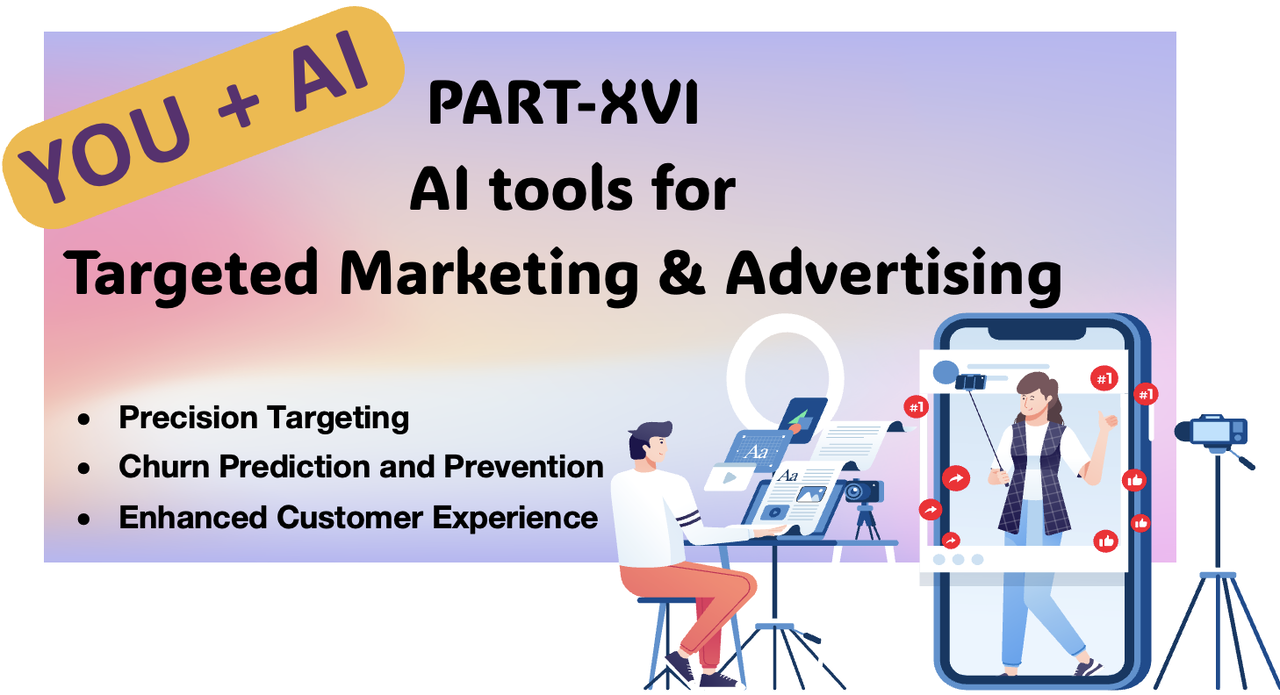
AI technologies have revolutionized the way businesses connect with their target audience, enabling hyper-personalized campaigns and enhancing customer engagement. Among the myriad applications of AI in marketing, targeted marketing and advertising stand out as key areas where AI’s capabilities are leveraged to deliver precise and effective messaging to specific consumer segments.

Let’s delve into the realm of AI-based targeted marketing and advertising, exploring its significance, benefits, and the top tools reshaping the landscape.

Significance of AI in Targeted Marketing & Advertising:

AI has ability to analyze vast amounts of data, identify patterns, and predict consumer behavior with remarkable accuracy. By leveraging AI algorithms, marketers can gain deeper insights into consumer preferences, interests, and purchase intent, enabling them to tailor campaigns that resonate with individual customers on a personal level.

Benefits of AI-Based Targeted Marketing & Advertising:

  1. Precision Targeting: AI algorithms can analyze demographic, behavioral, and psychographic data to identify and target specific audience segments, ensuring that marketing messages reach the most receptive audience.
  2. Personalization: AI enables dynamic content creation and personalized recommendations based on individual preferences, enhancing engagement and driving conversion rates.
  3. Optimized Campaigns: AI-powered analytics provide real-time insights into campaign performance, allowing marketers to optimize their strategies for better ROI and conversion rates.
  4. Cost Efficiency: By targeting the right audience with precision, AI-based marketing reduces wasteful ad spend, maximizing the efficiency of marketing budgets.
  5. Enhanced Customer Experience: Personalized communication and tailored offers result in a more enjoyable and relevant customer experience, fostering brand loyalty and advocacy.

Top AI-based Targeted Marketing & Advertising tools

Albert.ai: This platform uses AI to analyze vast amounts of user data and create personalized advertising campaigns across various channels, optimizing targeting and maximizing ROI.

Criteo AI Engine: Leveraging AI, Criteo personalizes display advertising and retargeting campaigns, offering dynamic creative optimization and audience prediction for improved ad performance.

Optimizely: Optimizely’s AI-driven experimentation platform enables marketers to test and optimize various aspects of their campaigns, from ad creatives to landing pages, to maximize conversion rates.

Epsilon PeopleCloud: Combines AI with advanced data management and analytics to identify high-value customer segments and deliver targeted advertising through various channels.

Adobe Advertising Cloud: This suite integrates AI across its advertising solutions, offering features like audience segmentation, predictive modeling, and real-time campaign optimization.

Facebook Dynamic Creative Optimization: Utilizing AI, Facebook automatically generates and tests ad variations, selecting the best-performing combination to maximize campaign reach and impact.

Google Audience Insights: This free tool from Google leverages AI to analyze audience demographics, interests, and online behavior, providing valuable insights for targeted advertising campaigns.

Amazon DSP: This programmatic advertising platform utilizes AI for audience targeting, bidding optimization, and campaign performance analysis, delivering targeted ads across Amazon properties and partner networks.

Xandr Monetize: This platform by IPG uses AI to optimize ad inventory management, targeting, and pricing strategies, maximizing value for publishers and advertisers.

Neustar Identity Link: This tool leverages AI to connect fragmented customer data across multiple channels, enabling precise audience targeting and personalized omnichannel marketing experiences.

Additional factors to consider when choosing an AI-based Targeted Marketing & Advertising tool:

  • Campaign goals and budget: Identify your specific goals (e.g., brand awareness, lead generation, website traffic) and choose a tool that aligns with your budget and objectives.
  • Target audience complexity: Consider the complexity of your target audience and the tool’s ability to create highly refined segments for effective targeting.
  • Data integration capabilities: Ensure the tool seamlessly integrates with your existing marketing and customer data sources.
  • Reporting and analytics: Evaluate the tool’s reporting and analytics capabilities to monitor campaign performance and optimize future strategies.
  • Compliance and data privacy: Verify the tool adheres to relevant data privacy regulations and security standards.

Remember, the ideal tool for you depends on your unique marketing needs, target audience, and technical environment. Evaluate different options and select the one that best empowers you to create targeted and impactful advertising campaigns that drive your business goals.

By harnessing the power of AI-driven tools and technologies, marketers can unlock new opportunities for growth, innovation, and customer satisfaction in an increasingly competitive landscape.

You+AI : Part XVI: Personalized & A/B Testing

Personalized Testing and A/B Testing stand out as powerful strategies for optimizing various aspects of business operations. With the advent of Artificial Intelligence (AI), these testing methods have undergone a significant transformation, becoming even more efficient, accurate, and insightful.

Let’s delve into how AI is revolutionizing personalized testing and A/B testing, and top 10 tools used for testing

AI can tailor the testing experience to different user segments based on their characteristics, leading to more relevant and insightful results

Top AI-based Personalized & A/B Testing tools

Optimizely: Features industry-leading AI capabilities for predictive testing, real-time personalization, and audience segmentation, offering deep insights for impactful test results.

AB Tasty: Employs AI-powered test automation, predictive analytics, and personalization engines to optimize test variations and personalize user experiences.

Dynamic Yield: Leverages AI for real-time personalization, product recommendations, and dynamic content updates, tailoring experiences based on individual user behavior.

VWO Engage: Offers AI-powered A/B testing, personalization features, and real-time visitor insights, helping optimize conversion rates and user engagement.

Kameleoon: Integrates AI for personalization, server-side testing, and feature flagging, providing flexibility and data-driven insights for optimization.

SiteSpect: Features AI-driven personalization, server-side testing, and multivariate testing capabilities, catering to enterprise-level optimization needs.

Adobe Target: Combines AI with advanced audience segmentation, personalization rules, and dynamic content delivery for data-driven optimization across various channels.

Convert: Offers AI-powered A/B testing, personalization, and heatmaps, providing insightful data for website and app optimization.

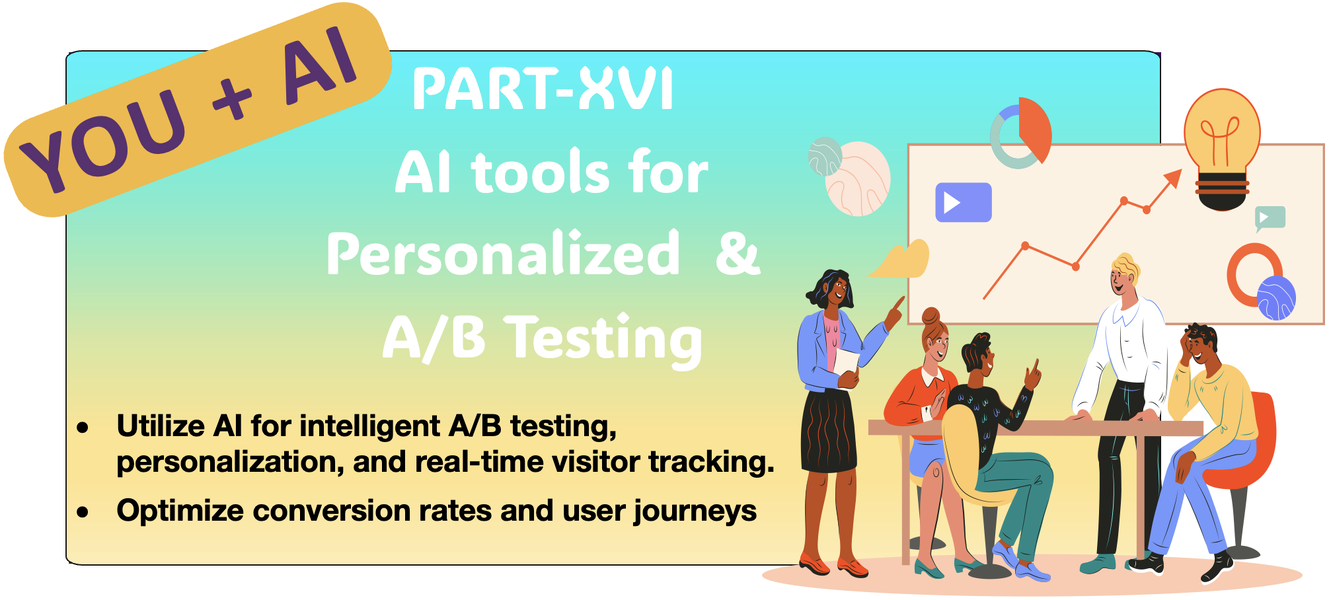
Omniconvert: Utilizes AI for intelligent A/B testing, personalization, and real-time visitor tracking, helping optimize conversion rates and user journeys.

Benefits of AI-Powered Testing

The integration of AI into personalized testing and A/B testing offers a multitude of benefits for businesses:

  • Enhanced Personalization: AI algorithms analyze vast amounts of user data to deliver personalized experiences tailored to individual preferences, leading to higher engagement and conversion rates.
  • Speed and Efficiency: AI automates testing processes, significantly reducing the time and resources required for hypothesis testing, execution, and analysis.
  • Data-Driven Insights: Machine learning algorithms uncover hidden patterns and correlations within datasets, providing actionable insights that drive informed decision-making.
  • Continuous Optimization: AI enables real-time adjustments based on user behaviour, ensuring that testing strategies remain adaptive and effective in dynamic environments.
  • Scalability: With AI handling complex computations and analysis, testing strategies can be scaled seamlessly to accommodate growing user bases and evolving business needs.

AI-powered testing strategies emerge as indispensable tools for driving growth, optimizing user experiences, and maximizing ROI. Personalized Testing and A/B Testing, empowered by Artificial Intelligence, offer unparalleled insights and efficiencies that pave the way for informed decision-making and sustainable business success.

Embracing AI in testing is not merely an option but a strategic imperative in the digital age.

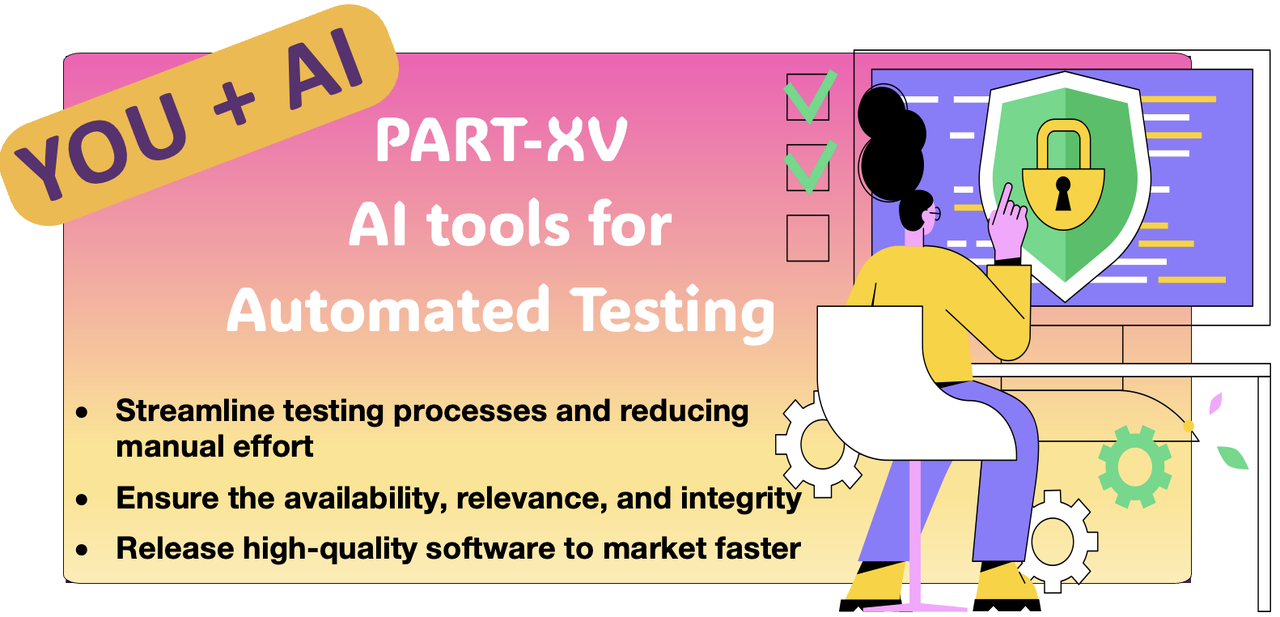
You+AI : Part XV: Automated Testing

AI powered Automated AI testing involves the use of AI algorithms and machine learning techniques to automate various aspects of the testing process. This approach leverages the power of AI to analyse vast amounts of data, identify patterns, and make intelligent decisions, mimicking human testers but with greater speed and accuracy that replaces traditionally used testing tools and methodologies that has been resource-intensive and time-consuming process, often prone to human error.

In this  XV edition of 25 Part “You+AI “ series, I delve into  AI tools for Automated Testing

Top 10 AI-powered Automated Testing

  1. Applitools Eyes (Visual Testing): Utilizes advanced AI to visually compare web UI elements and detect anomalies, ensuring visual consistency across browsers and devices.
  2. TestCraft by Perfecto (End-to-End Testing): Combines AI with Selenium for intelligent test script creation, self-healing capabilities, and real-time test execution insights.
  3. Functionize (Test Data Management): Leverages AI for automated test data generation, anomaly detection, and self-healing mechanisms, streamlining test data management.
  4. Mabl (Mobile Testing): Employs AI-powered test creation, self-healing capabilities, and in-depth analytics for automated mobile app testing.
  5. Katalon Platform (Multi-Purpose): Offers AI-powered features across API, web, mobile, and desktop testing, including test data generation, self-healing, and test optimization.
  6. Testim (Functional Testing): Leverages AI-powered test creation, automated test maintenance, and self-healing capabilities for web and mobile app testing.
  7. AccelQ (API Testing): Utilizes AI for intelligent API test script generation, data-driven testing, and self-healing functionalities.
  8. Parasoft C/C++test (Code Testing): Specifically designed for C/C++ code, employs AI for static analysis, unit test generation, and mutation testing.
  9. Applitools Ultrafast (Performance Testing): Combines AI with other techniques for performance testing, providing data-driven insights and anomaly detection.
  10. CloudHealth by Veracode (Security Testing): Leverages AI-powered code scanning for dynamic and static security vulnerabilities across various languages and platforms.

Challenges and Considerations:

Despite its many benefits, automated AI testing also poses certain challenges and considerations. These include:

  • Initial Setup and Integration: Implementing automated AI testing tools may require upfront investment in technology, infrastructure, and training. Integration with existing development workflows and tools can also present challenges.
  • Test Data Management: AI-driven testing relies heavily on quality test data to generate meaningful test cases and validate software behavior. Ensuring the availability, relevance, and integrity of test data can be a complex task.
  • Over-reliance on Automation: While automation can enhance testing efficiency, it’s essential to strike a balance and not rely solely on automated testing. Human intervention and exploratory testing are still valuable for uncovering nuanced issues and usability issues that AI may overlook.
  • Scalability, Security and privacy: Evaluate the tool’s pricing model and its ability to scale with your growing needs. Ensure the tool adheres to data security and privacy regulations relevant to your industry.

While challenges remain, the potential benefits of automated AI testing far outweigh the drawbacks, making it a game-changer for the software development industry.

Remember, the ideal tool depends on your unique testing goals and technical environment. Evaluate different options and select the one that best complements your current workflows and enhances your overall testing efficiency.

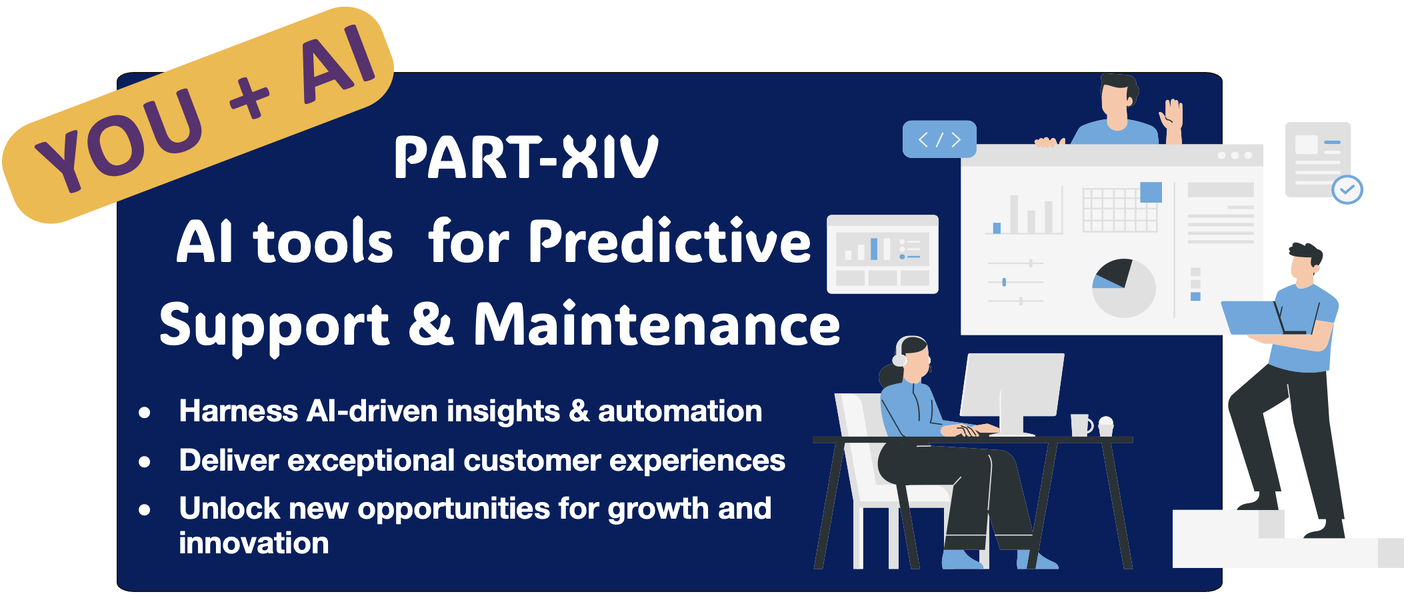
You+AI : Part XIV: Predictive Customer Support & Maintenance

In rapidly evolving digital landscape, customer support and maintenance have emerged as critical facets for businesses striving to stay competitive and meet the ever-growing demands of their customers. With the advent of Artificial Intelligence (AI), organizations are leveraging cutting-edge technologies to transform traditional support and maintenance operations, paving the way for enhanced efficiency, proactive problem-solving, and unparalleled customer experiences.

In this  XIV edition of 25 Part “You+AI “ series, I delve into top tools for Predictive Customer Support  & Maintenance.

Top 10 AI-based Predictive Customer Support tools

Along with their key features and considerations:

Churn360:

  • Key features: AI-powered churn prediction, customer segmentation, and risk scoring to identify customers at risk of churn.
  • Benefits: Proactive outreach to prevent churn, improved customer retention, increased customer lifetime value.
  • Considerations: Requires historical customer data for accurate predictions, may require integration with CRM systems.

Freshdesk Freddy AI:

  • Key features: AI-powered chatbot for answering support queries, suggesting relevant articles, and routing tickets to the right agents.
  • Benefits: 24/7 customer support availability, reduced resolution times, improved agent efficiency.
  • Considerations: May not handle complex questions, requires training with company-specific data.

LivePerson Einstein AI:

  • Key features: Conversational AI chatbot for personalized self-service support, proactive issue detection, and sentiment analysis.
  • Benefits: Improved customer satisfaction, reduced support costs, increased operational efficiency.
  • Considerations: Requires integration with existing communication channels, may be complex to set up and manage.

Helpshift Beacon:

  • Key features: AI-powered knowledge base search, contextual recommendations, and proactive chat with smart chatbots.
  • Benefits: Reduced reliance on live agents, improved self-service rates, personalized customer support experiences.
  • Considerations: Requires well-maintained knowledge base, may not be suitable for highly technical support needs.

Ada by Ada Support:

  • Key features: AI-powered virtual assistant for customer support across various channels, including email, chat, and social media.
  • Benefits: Improved first-contact resolution rates, reduced support volumes, increased agent productivity.
  • Considerations: Requires training with company-specific data, may not be fully customizable.

Zendesk Answer Bot:

  • Key features: AI-powered chatbot for answering common support questions, deflecting tickets, and routing complex issues to agents.
  • Benefits: Improved customer self-service, reduced support workload, enhanced agent efficiency.
  • Considerations: Limited customization options, requires integration with Zendesk platform.

Botmind:

  • Key features: AI-powered conversational AI platform for building custom chatbots tailored to specific support needs.
  • Benefits: Highly customizable chatbot experiences, improved customer engagement, automated resolution of simple issues.
  • Considerations: Requires technical expertise for development and maintenance, may require significant investment.

Drift Chatbot:

  • Key features: Conversational AI chatbot for lead qualification, sales support, and proactive customer engagement.
  • Benefits: Increased website conversions, improved sales prospecting, personalized support throughout the customer journey.
  • Considerations: Primarily focused on sales and lead generation, may not be suitable for all customer support needs.

Amelia by IPSoft:

  • Key features: AI-powered virtual assistant for complex customer support interactions, including troubleshooting and issue resolution.
  • Benefits: Reduced need for human intervention, improved resolution of complex technical issues, 24/7 support availability.
  • Considerations: High implementation costs, requires significant training and customization.

CX AI by Clarabridge:

  • Key features: AI-powered sentiment analysis of customer feedback, proactive issue identification, and predictive churn insights.
  • Benefits: Improved customer understanding, early detection of potential problems, better customer retention strategies.
  • Considerations: Requires integration with various customer feedback channels, may be complex to interpret and utilize insights.

Additional factors to consider when choosing an AI-based Predictive Customer Support tool:

  • Industry and business needs: Align the tool’s capabilities with your specific support requirements and customer demographics.
  • Data availability and quality: Ensure the tool can access and process your customer data effectively for accurate predictions.
  • Technical expertise and resources: Evaluate the level of technical expertise needed to implement and manage the tool.
  • Budget and pricing model: Compare the pricing models of different tools and choose one that fits your budget.
  • Scalability and flexibility: Consider the tool’s ability to adapt to your growing needs and future support strategies.

In today’s digital world, organizations must embrace AI to stay ahead of the curve in customer support and maintenance. By harnessing the power of AI-driven insights and automation, businesses can streamline operations, deliver exceptional customer experiences, and unlock new opportunities for growth and innovation.

As AI continues to evolve, its integration into customer support and maintenance operations will become increasingly seamless, empowering businesses to thrive in the dynamic landscape of the digital age. Those who embrace AI-driven transformation today will undoubtedly emerge as leaders in tomorrow’s competitive marketplace.

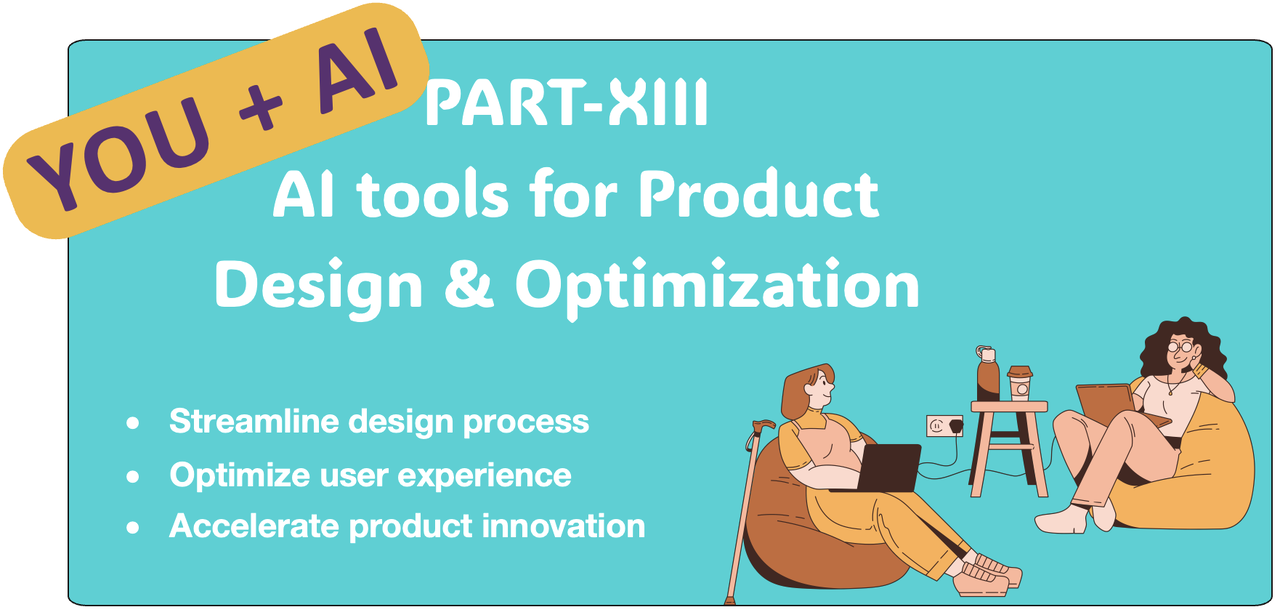
Part XIII: You+AI: Product Design & Optimization

In this  XIII edition of 25 Part “You+AI “ series, I delve into the Design and Development phase, focusing on Product Design & Optimization. AI’s role in this phase is transformative, enhancing efficiency and user experience

In Product Design & Optimization, AI can generate multiple design variations based on user preferences and data insights, accelerating the iteration process and leading to more user-friendly products. By harnessing the power of artificial intelligence, designers can swiftly explore a multitude of possibilities, refining each iteration with precision.

This iterative approach not only enhances the efficiency of the design process but also ensures that products are finely tuned to meet the evolving needs and expectations of users. With AI-driven optimization, designers can unlock innovative solutions and create experiences that resonate deeply with their target audience, ultimately driving greater user satisfaction and loyalty.

Top 10 AI-based Product Design amp; Optimization tools

Adobe Sensei (Integrated into Adobe XD): This tool serves designers by offering built-in AI features within the Adobe XD design platform. For instance, voice UI prototyping allows designers to create voice-controlled interfaces with real-time speech recognition and text-to-speech generation.

Content-aware layout automatically adjusts content layout based on object size and placement, saving time in manual adjustments. Additionally, design inspection identifies potential accessibility issues and suggests improvements, ensuring inclusivity in the design process.

For example, a designer creating a voice-controlled smart home app can utilize Adobe Sensei to prototype voice interactions seamlessly and ensure the layout adapts effectively to different screen sizes and accessibility requirements.

Figma Mirror: Figma Mirror streamlines user testing by enabling users to mirror and interact with prototypes directly on their mobile devices. AI analyzes interaction data collected during these tests and generates valuable insights for designers.

For instance, a UX designer creating a mobile banking app can use Figma Mirror to gather real-time feedback from users testing the prototype on their smartphones. The AI-powered insights can reveal patterns in user behavior, such as frequent navigation paths or areas of confusion, guiding iterative design improvements.

UXPin Merge: This AI-powered design collaboration tool facilitates real-time feedback and iteration on prototypes, accelerating design cycles for teams. UXPin Merge allows designers to seamlessly integrate design systems and code components into their prototypes, ensuring consistency and efficiency in the design process.

For example, a product design team working on a web application can use UXPin Merge to quickly incorporate design system components and receive instant feedback from stakeholders, leading to faster iterations and improved collaboration.

Maze: Maze offers AI-powered personalization for prototype testing experiences, tailoring questions and tasks to individual users for richer data. Designers can gather more nuanced insights into user behavior and preferences through personalized testing scenarios.

For example, a UX researcher testing a new e-commerce website can use Maze to dynamically adjust test tasks based on each participant’s browsing history and preferences, leading to more relevant feedback and actionable insights.

UserTesting: Integrating AI-based sentiment analysis and heatmaps, UserTesting enables designers to analyze user feedback videos and identify areas of confusion or delight. This tool provides valuable insights into user emotions and preferences, helping designers make informed decisions about product improvements.

For example, a product design team launching a new social media platform can use UserTesting to analyze user reactions to specific features through sentiment analysis, guiding iterative design changes to enhance user satisfaction.

Hotjar: Hotjar combines heatmaps, session recordings, and AI-powered surveys to capture in-depth user behavior data and optimize product design based on real-world usage. Designers can gain valuable insights into how users interact with their products, identifying pain points and areas for improvement.

For example, a UX designer redesigning a website can use Hotjar to analyze heatmaps and session recordings to identify usability issues, while AI-powered surveys can gather user feedback to inform design decisions and prioritize improvements.

Designs.ai: This tool utilizes AI to generate creative layouts, mockups, and design variations based on user input and design preferences. Designers can quickly explore different design options and iterate on concepts without starting from scratch.

For example, a graphic designer creating marketing materials for a new product launch can use Designs.ai to generate multiple design variations based on branding guidelines and audience preferences, saving time and effort in the design process.

Uizard: Uizard converts hand-drawn sketches and wireframes into digital prototypes using intelligent object recognition and vector conversion. Designers can easily translate rough concepts into polished digital designs, speeding up the prototyping process.

For example, a UI designer sketching wireframes for a mobile app can use Uizard to quickly convert hand-drawn sketches into interactive prototypes, allowing for rapid iteration and refinement.

Tome: Leveraging AI, Tome generates compelling presentations and marketing materials from existing product assets, saving designers time and effort. Designers can automate the creation of visually appealing presentations, freeing up time for more strategic tasks. For example, a product manager preparing a pitch deck for an investor meeting can use Tome to generate professional-looking slides using existing product screenshots and data visualizations, ensuring a polished presentation with minimal manual effort.

Let’s Enhance: Let’s Enhance uses AI to upscale images and improve resolution, enhancing photo clarity for product visuals and marketing materials. Designers can enhance the quality of images without losing detail, creating more impactful visuals for their projects.

For example, a graphic designer creating product packaging designs can use Let’s Enhance to upscale product photos and ensure crisp, high-resolution images that showcase product details effectively, enhancing the overall visual appeal.

Additional factors to consider when choosing an AI-based product design & optimization tool:

  • Project needs: Identify the specific pain points you want to address, whether it’s prototyping, user testing, design automation, or image optimization.
  • Target audience: Consider the tool’s ease of use and accessibility for your design team and target users.
  • Integration: Ensure compatibility with your existing design workflows and software.
  • Pricing: Evaluate the pricing model and features offered compared to your budget.

Remember, the best tool for you depends on your specific needs and project goals. By understanding the unique capabilities of AI-powered design tools, you can unlock their potential to streamline your design process, optimize user experience, and bring innovative products to market faster.

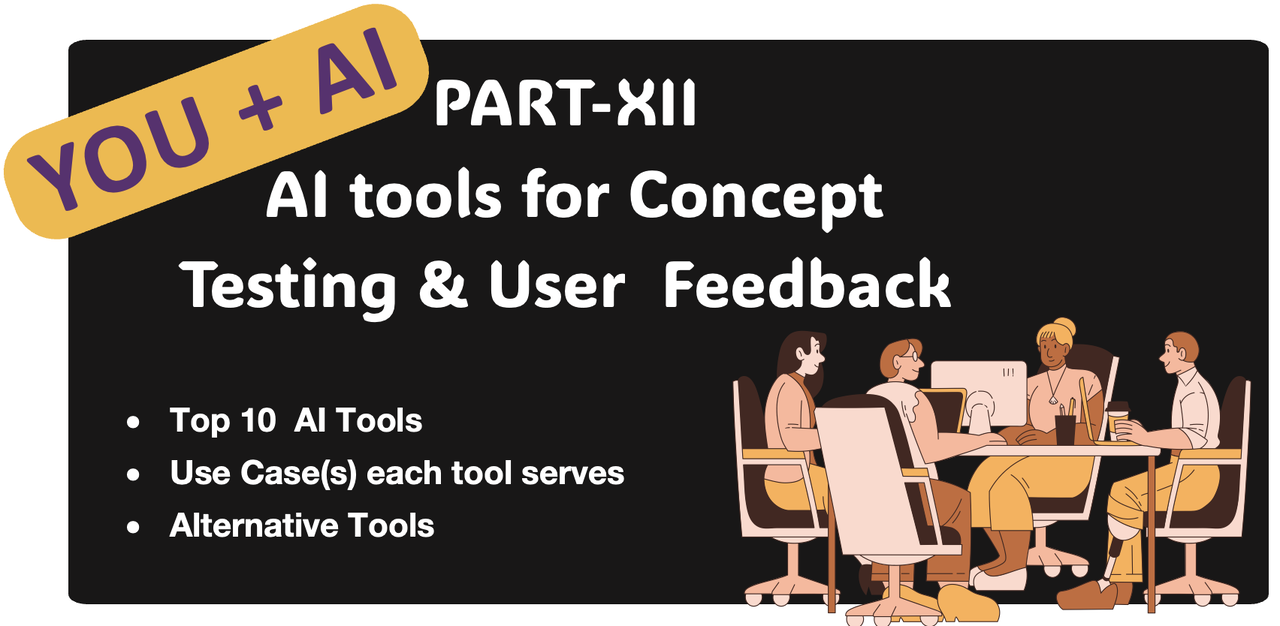
You+AI : Part XII – Concept Testing and User Feedback

Ideation & Research is one of the first and crucial step in product development lifecycle.

In this article I am focussing on another step in Ideation and Research commonly called as Concept Testing & User Feedback which helps in analysing feedback from user testing sessions to understand preferences, identify pain points, and refine product concepts quickly and efficiently.

Market and Trend Analysis is yet another sub branch of this phase in PDLC and I wrote a dedicated article on the tools for M&T Analysis

Top 10 AI tools used for  Concept Testing & User Feedback

  1. UserTestingAI: Use Cases: Concept Testing: Quickly gather feedback on various concepts from a large global audience. Sentiment Analysis: Utilize AI-powered sentiment analysis to understand user reactions and preferences. Alternative Tool: Try UserZoom for similar concept testing capabilities with a focus on user experience research.
  2. Respondent: Use Cases: Targeted Respondents: Access millions of targeted respondents for concept testing. Theme Identification: Utilize AI to identify key themes and pain points from responses. Alternative Tool: Consider SurveyMonkey Audience for accessing targeted respondents with robust survey capabilities.
  3. Lookback: Use Cases: Fast Concept Testing: Conduct fast and affordable concept testing using AI-powered micro-interviews. Sentiment Analysis: Benefit from automated transcription and sentiment analysis for deeper insights. Alternative Tool: Explore User Interviews for conducting qualitative research with automated transcription and analysis features.
  4. Maze: Use Cases: Personalized Testing: Utilize AI to personalize the testing experience for users. Emotion Analysis: Analyze user emotions based on facial expressions and mouse movements. Alternative Tool: Check out Optimal Workshop for conducting user research with emotion analysis features.
  5. Validify: Use Cases: Advanced Questioning: Employ AI for advanced questioning techniques in concept testing. Real-time Analysis: Benefit from real-time data analysis for actionable insights. Alternative Tool: Consider Userlytics for advanced user testing capabilities with real-time analytics.
  6. Survicate: Use Cases: Custom Surveys: Build custom surveys and chatbots for diverse feedback channels. Data Visualization: Utilize automatic data visualization and trend identification. Alternative Tool: Explore Qualtrics for creating custom surveys with advanced analytics and visualization options.
  7. Attest: Use Cases: Fast Validation: Conduct AI-powered concept testing with fast turnaround times. Cost-effective Testing: Benefit from competitive pricing for quick validation. Alternative Tool: Look into Zappi for AI-powered market research solutions with fast validation capabilities.
  8. EnjoyHQ: Use Cases: Usability Testing Analysis: Analyze usability testing videos using AI for identifying critical user behaviors. Pain Point Identification: Automatically identify pain points and usability issues. Alternative Tool: Check out Dovetail for analyzing user research data, including usability testing videos, with AI-powered insights.
  9. Hotjar: Use Cases: User Interaction Analysis: Integrate AI with heatmaps and recordings to understand user interactions. Preference Identification: Analyze user preferences on websites and apps. Alternative Tool: Consider Crazy Egg for heatmapping and user behavior analysis with AI-driven insights.
  10. Decibel Insight: Use Cases: Qualitative Feedback Analysis: Leverage AI to analyze large volumes of qualitative feedback. Insight Generation: Identify key themes and actionable insights from qualitative data. Alternative Tool: Explore FullStory for qualitative analytics and session replay capabilities with AI-driven insights.

Additional factors to consider when choosing an AI-based concept testing & user feedback tool:

  • Project needs: Consider the types of concepts you’re testing, your target audience, and the depth of feedback required.
  • Budget: Pricing models vary between tools, so choose one that fits your budget and project scope.
  • Usability: Ensure the tool is easy to use for both you and your participants.
  • Security and privacy: Make sure the tool complies with data privacy regulations and protects user information.

Remember, the best tool for you depends on your specific needs and preferences.

You+AI: Part XI: AI Tools for Market and Trend Analysis

In My last article I talked about how AI is impacting Product development Lifecycle. The next 10 articles are focused on AI tools available for each phase and underlying steps.

This article focusses on the AI tools available for performing effective Market and Trend Analysis.

The first phase of the cycle is Ideation & Research, which consists of 2 parts.

  • Market and Trend Analysis: AI-powered tools can analyse vast amounts of customer data, social media trends, and competitor information to identify unmet needs and potential opportunities. This can help companies generate more informed and innovative product ideas.
  • Concept Testing & User Feedback: AI algorithms can analyse text and feedback from user testing sessions to understand preferences, identify pain points, and refine product concepts quickly and efficiently.

Here are the top 10 tools

Brandwatch Consumer Research:

Utilizing AI, Brandwatch delves into social media data, news articles, and online sources to discern consumer trends and sentiment. Additionally, it aids in monitoring the effectiveness of marketing campaigns and scrutinizing competitor activity. Use it to:

  • Identify evolving consumer preferences and sentiments.
  • Evaluate the impact of marketing strategies.
  • Benchmark against competitors in real-time.

Talkwalker:

Similar to Brandwatch, Talkwalker specializes in social listening and analytics. Leveraging AI, it helps businesses comprehend online discussions about their brand while also pinpointing emerging trends and monitoring competitor activity. Use it to:

  • Gain insights into brand perception and reputation.
  • Stay ahead of trends shaping your industry.
  • Benchmark against competitors’ online presence.

Semrush:

Primarily known for its SEO and marketing tools, Semrush employs AI for market research and trend analysis. It assists businesses in discovering new keyword opportunities, tracking competitor rankings, and comprehending industry trends. Use it to:

  • Optimize SEO strategies with data-driven keyword insights.
  • Monitor competitor performance across digital channels.
  • Identify emerging market trends for strategic planning.

SpyFu:

SpyFu specializes in tracking competitors’ online marketing endeavors, encompassing SEO, PPC, and social media campaigns. It also offers insights into competitor website traffic and keyword rankings. Use it to:

  • Uncover competitors’ digital marketing strategies.
  • Benchmark against competitors’ search engine rankings and advertising efforts.
  • Identify high-performing keywords and ad copy for optimization.

Similarweb:

Offering comprehensive website traffic and analytics data, Similarweb’s AI-driven features aid in understanding competitors’ online presence and identifying new marketing opportunities. Use it to:

  • Analyze competitor website traffic sources and audience demographics.
  • Benchmark against competitors’ online performance.
  • Identify potential partnership or advertising opportunities based on industry insights.

Buzzsumo:

Buzzsumo specializes in identifying trending content and topics across social media platforms. It’s also valuable for monitoring your own content performance and identifying influential figures in your industry. Use it to:

  • Discover trending topics for content creation.
  • Identify influential individuals for partnership opportunities.
  • Benchmark content performance against competitors.

TrendHunter:

With curated trend insights from various sources, TrendHunter’s AI-driven features assist businesses in spotting emerging trends early and capitalizing on them. Use it to:

  • Stay ahead of emerging consumer trends and preferences.
  • Gain inspiration for product innovation and marketing strategies.
  • Anticipate shifts in consumer behavior and market dynamics.

Google Trends:

This free tool from Google provides insights into search volume trends over time. It’s invaluable for identifying emerging trends and gauging public interest in specific topics. Use it to:

  • Identify rising search trends related to your industry or products.
  • Validate the demand for new products or services.
  • Inform content and marketing strategies based on search trends.

Socialbakers:

Offering social media analytics and marketing tools, Socialbakers’ AI-powered features aid in identifying emerging trends on social media platforms and tracking the performance of social media campaigns. Use it to:

  • Monitor social media conversations and sentiment around your brand.
  • Benchmark against competitors’ social media performance.
  • Optimize social media strategies based on data-driven insights.

Mention:

Mention helps businesses track brand mentions across online platforms, including social media, news articles, and blogs. It also provides sentiment analysis and insights into how people perceive your brand. Use it to:

  • Monitor brand sentiment and reputation in real-time.
  • Engage with customers and address feedback promptly.
  • Identify opportunities for brand advocacy and partnership collaborations.

The best tool for you will depend on your specific needs and budget.

These tools empower businesses to glean invaluable insights, track competitor activities, and stay ahead in the dynamic market landscape. Remember, the right tool for you hinges on your unique requirements and budget.

Stay tuned for more insights as we continue our journey with You+AI

You+AI: Part X: Impact of AI on Product Development Lifecycle

The product development lifecycle (PDLC) is the journey a product takes from conception to launch and beyond. Traditionally, it involved a linear sequence of stages, often burdened by inefficiencies and delays. However, Artificial Intelligence (AI) is emerging as a game-changer, injecting unprecedented efficiency and innovation into each phase of the PDLC.

Stay tuned as the next ten articles will delve into AI tools and frameworks available for each phase of the PDLC, empowering businesses to streamline processes and drive innovation.

How AI impacts each stage

1.  Ideation & Research:

  • Market and Trend Analysis: AI-powered tools can analyse vast amounts of customer data, social media trends, and competitor information to identify unmet needs and potential opportunities. This can help companies generate more informed and innovative product ideas.
  • Concept Testing & User Feedback: AI algorithms can analyse text and feedback from user testing sessions to understand preferences, identify pain points, and refine product concepts quickly and efficiently.

Example: Netflix uses AI to personalize movie recommendations based on user viewing history and trends, leading to higher engagement and satisfaction.

2. Design & Development:

  • Product Design & Optimization: AI can generate multiple design variations based on user preferences and data insights, accelerating the iteration process and leading to more user-friendly products.
  • Predictive Maintenance & Quality Control: AI-powered systems can analyze sensor data from prototypes and manufacturing processes to predict potential failures and ensure product quality.

Example: Ford uses AI to design car interiors that maximize comfort and minimize driver fatigue, based on simulations and user data.

3. Testing & Validation:

  • Automated Testing: AI-powered tools can automate repetitive testing tasks, freeing up human resources for more complex validation processes.
  • Personalized Testing & A/B Testing: AI can tailor the testing experience to different user segments based on their characteristics, leading to more relevant and insightful results.

Example: Amazon uses AI to personalize A/B tests of product features for different user groups, optimizing them for specific target audiences.

4. Launch & Marketing:

  • Targeted Marketing & Advertising: AI algorithms can analyze customer data and predict buying behavior, enabling personalized marketing campaigns and higher conversion rates.
  • Dynamic Pricing & Product recommendations: AI can adjust prices and recommend products based on real-time market trends and individual customer preferences, maximizing revenue and customer satisfaction.

Example: Spotify uses AI to recommend personalized playlists and music based on individual listening habits, increasing user engagement and retention.

5. Support & Maintenance:

  • Predictive Customer Support: AI-powered chatbots can answer common customer inquiries and troubleshoot issues, reducing waiting times and improving customer satisfaction.
  • Product Usage Analysis & Feedback: AI can analyze user behavior and feedback to identify areas for improvement and proactively address potential issues.

Example: Apple uses AI-powered Siri to answer customer questions and resolve technical issues, improving the overall customer experience.

Beyond Benefits: Addressing Challenges

Benefits of AI in Product Management:

  • Faster innovation cycles: Identify and test ideas quickly, leading to earlier market launches.
  • Increased efficiency: Automate tasks, freeing up resources for creative problem-solving.
  • Data-driven decisions: Leverage insights from vast datasets for informed product decisions.
  • Improved user experience: Personalize features and content, resulting in higher satisfaction.

Challenges of AI in Product Management:

  • Ethical considerations: Ensure AI models are unbiased and align with ethical principles.
  • Data privacy concerns: Address user data privacy concerns and ensure transparency in AI use.
  • Technical expertise: Build or acquire the necessary expertise to implement and manage AI tools.

While AI offers undeniable advantages, ethical considerations and potential biases in algorithms need careful attention. Continuous testing, responsible data collection, and human oversight remain crucial to ensure fairness and transparency in AI-powered PDLC tools.

AI is rapidly transforming the PDLC, bringing speed, efficiency, and data-driven insights to every stage. By embracing AI responsibly, companies can develop innovative products that customers love, achieving a competitive edge in the ever-evolving market.

P.S. : Stay tuned as the next ten articles will delve into AI tools and frameworks available for each phase of the PDLC, empowering businesses to streamline processes and drive innovation.

You+AI: Part IX: Evolving Your Software Approach for the AI Age

In the rapidly evolving landscape of technology, the emergence of artificial intelligence (AI) stands as a transformative force, reshaping industries and redefining the way we approach software development.

As businesses seek to harness the power of AI to gain competitive advantage and meet the escalating demands of the digital age, the imperative to adapt software strategies has never been more pressing.

Crafting AI Strategy

The integration of AI into software development opens up a world of opportunities for businesses. One of the most significant advantages is enhanced efficiency and productivity. AI-powered algorithms can automate repetitive tasks, analyse vast amounts of data in real-time, and provide actionable insights, thereby streamlining workflows and freeing up valuable human resources for more strategic endeavours.

Moreover, AI enables software to become more intelligent and adaptable. Machine learning algorithms can continuously learn from data, allowing software systems to evolve and improve over time. This adaptability is particularly crucial in dynamic environments where rapid changes occur, enabling organizations to stay agile and responsive to shifting market demands.

Three Considerations for Crafting Your AI Strategy:

  1. Assessing Necessary Changes in Product Areas: Identify aspects of your product that can benefit from AI integration. This could include automating repetitive tasks, enhancing user experience through personalized recommendations, or improving overall efficiency. Example: A customer service platform may need to incorporate AI-powered chatbots to handle routine inquiries, freeing up human agents for more complex issues.
  2. Determining Sustainable Elements of Your Product: Recognize the components of your product that will remain unchanged despite AI integration. These could include core functionalities, user interface elements, or foundational features that define your product’s identity. Example: A project management tool may retain its task organization features while integrating AI for intelligent scheduling and resource allocation.
  3. Exploring New Opportunities for Product Enhancement: Explore innovative ways to leverage AI to introduce entirely new capabilities to your product. Consider functionalities that were previously unattainable or impractical without AI technology. Example: An e-commerce platform may introduce AI-powered visual search functionality, allowing users to search for products using images instead of text queries.

Challenges to Overcome

Despite the myriad benefits of AI integration, organizations must navigate several challenges on the path to evolving their software approach. One such challenge is the scarcity of AI talent.. Additionally, ethical considerations surrounding AI pose significant challenges for software developers. Issues such as bias in algorithms, data privacy concerns, and the potential for unintended consequences

Moreover, integrating AI into existing software systems can be complex and resource-intensive. Legacy systems may lack the necessary infrastructure to support AI capabilities, requiring significant investments in infrastructure upgrades and reengineering efforts. AI Integration is an incremental process that can be primarily broken down to 4 stages

Stage 1: Manual Processes Exclusively:

All tasks are performed manually without any reliance on AI technology.

Stage 2: AI-Augmented Processes:

Human-led procedures receive support from AI, offering insights, recommendations, or data analysis to enrich decision-making.

Stage 3: AI-Directed Processes with Human Supervision:

AI assumes the primary role in driving processes, while humans oversee, refine, and authorize as needed.

Stage 4: Fully Automated Processes Enabled by AI:

Processes are completely automated by AI, with minimal to no human intervention, akin to advancements seen in self-driving vehicle technologies.

Best Practices for AI-Driven Software Development

To navigate the challenges and capitalize on the opportunities presented by AI integration, organizations must adopt best practices for AI-driven software development.

Firstly, it is essential to cultivate a culture of innovation and continuous learning within the organization. Encouraging collaboration between data scientists, software engineers, and domain experts fosters creativity and accelerates the development of AI-powered solutions.

Additionally, organizations should prioritize transparency and accountability in AI development processes. Documenting data sources, algorithms, and decision-making processes enhances transparency and enables stakeholders to understand and audit AI-driven systems effectively.

Furthermore, organizations must invest in robust data governance frameworks to ensure the quality, integrity, and security of data used in AI applications. Implementing data governance policies and procedures helps mitigate risks associated with data bias, privacy violations, and regulatory non-compliance.

Lastly, organizations should embrace an agile approach to software development, iteratively designing, implementing, and refining AI-driven solutions based on user feedback and evolving business requirements. This iterative approach enables organizations to adapt quickly to changes and deliver value to customers more rapidly.

In conclusion, the integration of AI into software development represents a paradigm shift that offers immense opportunities for businesses to innovate, optimize, and differentiate themselves in the digital age.

By embracing AI-driven software approaches and addressing the associated challenges with diligence and foresight, organizations can unlock new levels of efficiency, intelligence, and customer satisfaction. As we continue to navigate the AI frontier, those who evolve their software approach strategically will undoubtedly emerge as leaders in their respective industries.