

Scaling Gen AI: Insights, Techniques, and Best Practices for Handling Unstructured Data

The advent of generative AI (gen AI) offers a transformative opportunity for organizations to leverage advanced data analytics and automation. This shift necessitates robust data platforms and a strategic approach to managing both structured and unstructured data. To successfully integrate gen AI capabilities, organizations must focus on data quality, efficient data management, and strong security protocols.

McKinsey recently published a report titled “A data leader’s technical guide to scaling gen AI”.

Key Insights from the McKinsey’s Guide

Enhancing Data Quality:

  • Accuracy and Relevance: High-quality data is critical to avoid inaccurate AI outputs, costly corrections, and potential security risks.
  • Managing Unstructured Data: Tools like knowledge graphs and multimodal models can help manage complex data relationships and formats.

Creating and Managing Data Products:

  • End-to-End Data Product Creation: Automation in creating data pipelines and products can significantly reduce time and increase scalability.
  • Synthetic Data Generation: Generative AI tools can create synthetic data for testing and development, especially in highly regulated industries like healthcare.

Improving Data Management:

  • Orchestration and Modularity: Utilizing agent-based frameworks ensures consistency and reusability in managing gen AI applications.
  • Data Catalogs and Metadata Tagging: Gen AI-augmented data catalogs can enhance real-time metadata tagging and data discovery.

Security and Coding Standards:

  • Data Security: Implementing modularized pipelines with robust security controls is essential for handling unstructured data.
  • Integrating Coding Best Practices: Ensuring that gen AI-generated code adheres to organizational standards helps maintain quality and consistency.

Techniques for Integrating Gen AI

Enhanced Data Pipelines:

  • Medallion Architecture: A medallion architecture helps organize data and supports modular pipeline development, aiding in the integration of gen AI capabilities. Read more about MedallionArchitecture Read more about data modelling design patterns(technical experience required to grasp the concepts)
  • Automated Evaluation Methods: Automated methods to evaluate and score data relevancy can enhance the accuracy of AI outputs.

Utilizing Synthetic Data:

  • Test Data Generation: Synthetic data can be used to test and validate new functionalities, safeguarding real data.

End-to-End Automation:

Data Orchestration:

Best Practices for Handling Unstructured Data

Modular Data Security:

Role-Based Access Control: Implementing role-based access controls at each checkpoint in the data pipeline ensures secure handling of unstructured data.

Data Cataloging and Metadata Management:

Automated Metadata Generation: Gen AI can automatically generate metadata from unstructured content, improving data management and discovery.

Coding Standards Integration:

Quality Assurance: Reviewing and integrating gen AI-generated code with existing coding standards is crucial for maintaining data quality and consistency.

Continuous Monitoring and Evaluation:

Regular Audits: Conducting regular audits of data pipelines and gen AI outputs helps identify and address issues promptly.

Integrating generative AI into organizational systems presents both challenges and opportunities. By focusing on data quality, employing advanced data management techniques, and ensuring robust security measures, organizations can fully realize the potential of gen AI.

Death by Excel: Burying Your Projects in Spreadsheets

You might be familiar with the term “Death by PowerPoint,” where data is presented in lengthy, unproductive meetings with no actionable outcomes.

Similarly, “Death by Excel” describes a scenario where you dive into using Excel for project management without fully considering your project’s needs. This often results in excessive manual updates and heavy, data-intensive workbooks that require significant resources just to manage the data.

Microsoft Excel has been an indispensable tool since its launch in 1985. Its robust feature set includes data analysis, graphing, and a wide range of formulas that cater to various business needs. Excel’s adaptability has made it a favourite for project management, allowing users to create detailed project plans, track progress, and manage resources all in one place.

Some Critical features making Excel indispensable

  1. Flexibility: Excel can be customized for virtually any project management task.
  2. Familiarity: Most professionals are trained in its use, reducing the learning curve.
  3. Integration: Seamlessly integrates with other Microsoft Office products.

However, I have observed many professionals jumping to Excel sheets without considering whether Excel aligns with their project data, workflows, tracking and reporting needs.

Consider a Program Management Scenario:

  1. Five cross-functional teams.
  2. Each team has sequential activities flowing through the work pipeline.
  3. Each step produces multiple outputs (files, documents, data).
  4. Teams need notifications once the previous team completes their activities.
  5. Five main project statuses, each with 2-3 sub-statuses that need tracking.
  6. Over 20 projects are delivered weekly.

It was surprising to see Excel even being considered for tracking this. I preferred and implemented JIRA as a solution for the following reasons:

  1. Task Management: Easy task creation( even from Outlook mails), assignment, and tracking.
  2. Project Views: Offers multiple project views (list, board, timeline) to suit different  team and management level project health and status reporting
  3. Collaboration: Enhanced collaboration features, including comments, file attachments, and team messaging.
  4. Work Queues : I automated task assignment to individual team queues and inter-team work flow based on the status and substates of the tasks
  5. Automation: Automates repetitive tasks, freeing up time for more critical work.
  6. Reporting and Analytics: JIRA provides insightful reports and dashboards that visualize project progress, identify bottlenecks, and measure team performance.
  7. Integrations: JIRA integrates with wide variety of tools including Realtime export to Excel using JQL or pre-defined Filters, streamlining workflows and centralizing project information

Using JIRA, I am able to track 50+ projects in a daily stand-up meeting within 30 minutes.

What are Your Thoughts?

If you had to implement and manage this kind of program, what tool would you choose among the plethora of project, task, and workflow management tools available? Share your experiences and recommendations!

AI is Transforming Project Management

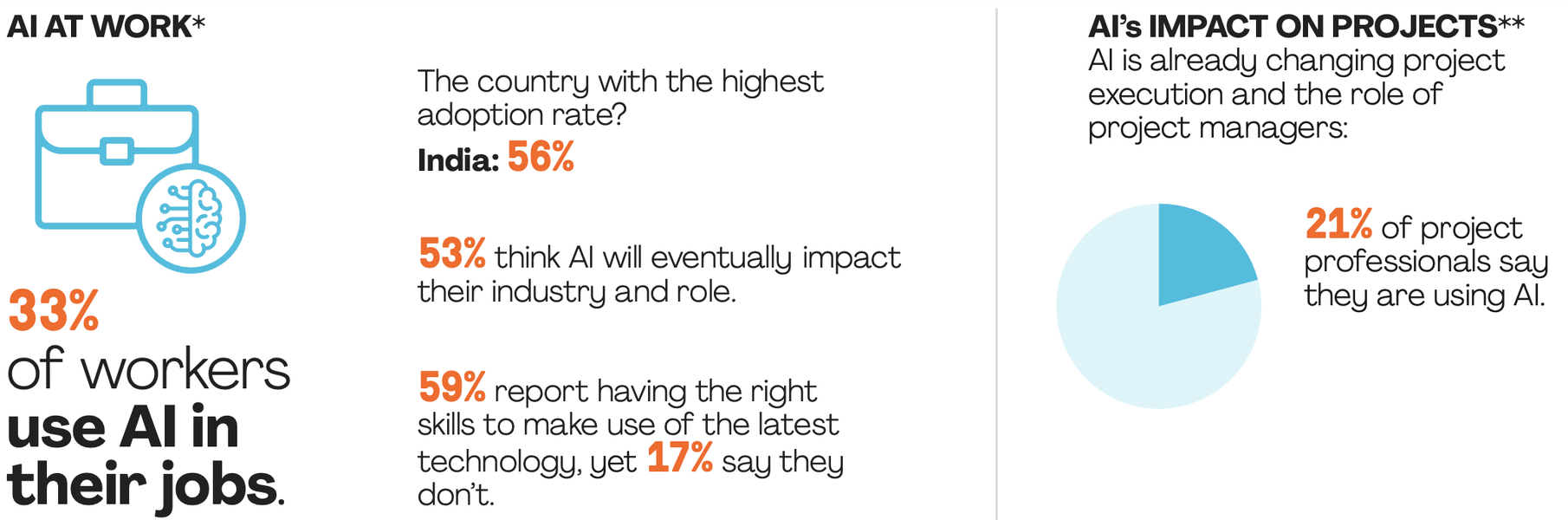
Artificial intelligence (AI) is rapidly transforming the world of project management, according to a new report by the Project Management Institute (PMI). The report, titled “PMI’s Global Project Management Job Trends 2024 Report” found that 33% of workers already use AI in their jobs, and 82% of senior leaders say AI will have at least some impact on projects.

The report also found that there is a significant demand for AI skills, with a 2,000% increase in job postings referencing generative AI skills from March to September 2023. However, there is also a learning gap, with only 13% of employees having been offered AI training.

“The need for upskilling is essential,” the report says. “Sixty percent of older millennials (ages 35-44) say upskilling in AI will be essential, and 91% of respondents believe AI will have at least a moderate impact on the project management profession.”

The report’s findings suggest that AI is having a major impact on project management, and that this trend is likely to continue. Project managers who want to stay ahead of the curve will need to develop their AI skills.

Here are some key takeaways from the PMI report:

  • AI is already being used by a significant number of workers (33%).
  • Senior leaders believe that AI will have a major impact on projects (82%).
  • There is a high demand for AI skills (job postings for generative AI skills increased by 2,000% from March to September 2023).
  • There is a learning gap in AI skills (only 13% of employees have been offered AI training).
  • Upskilling in AI is essential for project managers who want to stay ahead of the curve (60% of older millennials say that upskilling in AI will be essential).

The PMI report is a valuable resource for project managers who are interested in learning more about the impact of AI on their profession. The report’s findings suggest that AI is here to stay, and that project managers who want to be successful in the future will need to develop their AI skills.