AI technologies have revolutionized the way businesses connect with their target audience, enabling hyper-personalized campaigns and enhancing customer engagement. Among the myriad applications of AI in marketing, targeted marketing and advertising stand out as key areas where AI’s capabilities are leveraged to deliver precise and effective messaging to specific consumer segments.
Let’s delve into the realm of AI-based targeted marketing and advertising, exploring its significance, benefits, and the top tools reshaping the landscape.
Significance of AI in Targeted Marketing & Advertising:
AI has ability to analyze vast amounts of data, identify patterns, and predict consumer behavior with remarkable accuracy. By leveraging AI algorithms, marketers can gain deeper insights into consumer preferences, interests, and purchase intent, enabling them to tailor campaigns that resonate with individual customers on a personal level.
Benefits of AI-Based Targeted Marketing & Advertising:
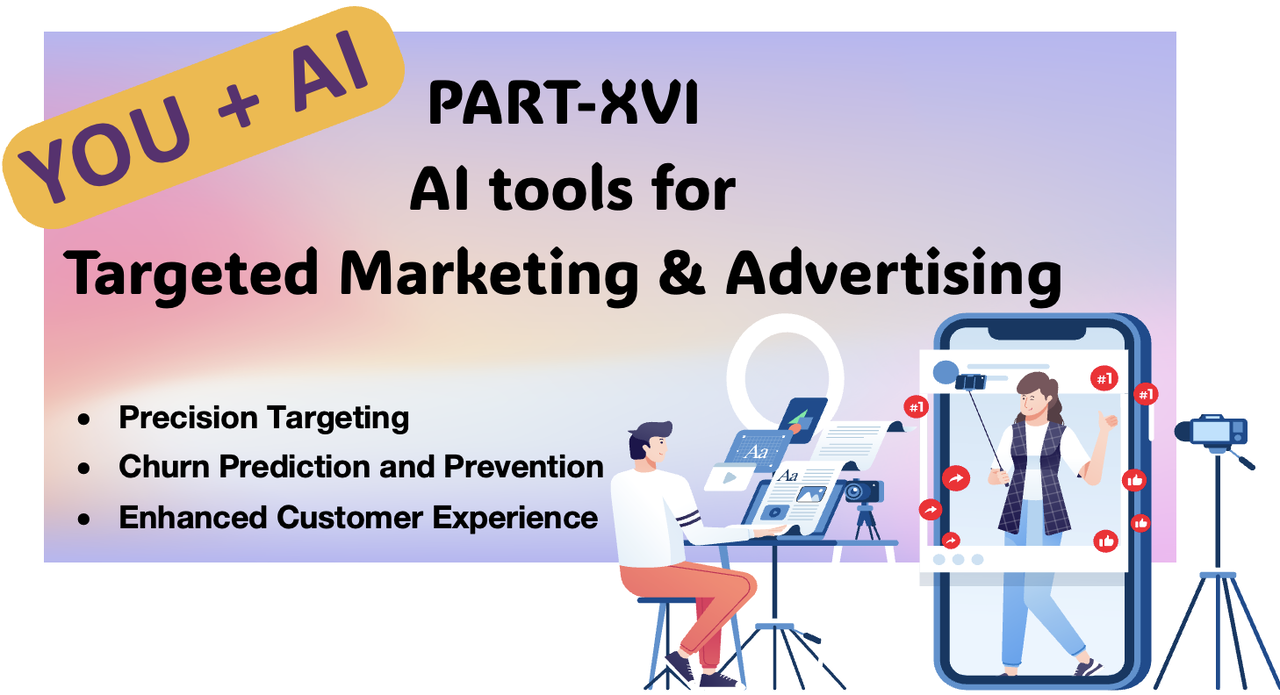
- Precision Targeting: AI algorithms can analyze demographic, behavioral, and psychographic data to identify and target specific audience segments, ensuring that marketing messages reach the most receptive audience.
- Personalization: AI enables dynamic content creation and personalized recommendations based on individual preferences, enhancing engagement and driving conversion rates.
- Optimized Campaigns: AI-powered analytics provide real-time insights into campaign performance, allowing marketers to optimize their strategies for better ROI and conversion rates.
- Cost Efficiency: By targeting the right audience with precision, AI-based marketing reduces wasteful ad spend, maximizing the efficiency of marketing budgets.
- Enhanced Customer Experience: Personalized communication and tailored offers result in a more enjoyable and relevant customer experience, fostering brand loyalty and advocacy.
Top AI-based Targeted Marketing & Advertising tools
Albert.ai: This platform uses AI to analyze vast amounts of user data and create personalized advertising campaigns across various channels, optimizing targeting and maximizing ROI.
Criteo AI Engine: Leveraging AI, Criteo personalizes display advertising and retargeting campaigns, offering dynamic creative optimization and audience prediction for improved ad performance.
Optimizely: Optimizely’s AI-driven experimentation platform enables marketers to test and optimize various aspects of their campaigns, from ad creatives to landing pages, to maximize conversion rates.
Epsilon PeopleCloud: Combines AI with advanced data management and analytics to identify high-value customer segments and deliver targeted advertising through various channels.
Adobe Advertising Cloud: This suite integrates AI across its advertising solutions, offering features like audience segmentation, predictive modeling, and real-time campaign optimization.
Facebook Dynamic Creative Optimization: Utilizing AI, Facebook automatically generates and tests ad variations, selecting the best-performing combination to maximize campaign reach and impact.
Google Audience Insights: This free tool from Google leverages AI to analyze audience demographics, interests, and online behavior, providing valuable insights for targeted advertising campaigns.
Amazon DSP: This programmatic advertising platform utilizes AI for audience targeting, bidding optimization, and campaign performance analysis, delivering targeted ads across Amazon properties and partner networks.
Xandr Monetize: This platform by IPG uses AI to optimize ad inventory management, targeting, and pricing strategies, maximizing value for publishers and advertisers.
Neustar Identity Link: This tool leverages AI to connect fragmented customer data across multiple channels, enabling precise audience targeting and personalized omnichannel marketing experiences.
Additional factors to consider when choosing an AI-based Targeted Marketing & Advertising tool:
- Campaign goals and budget: Identify your specific goals (e.g., brand awareness, lead generation, website traffic) and choose a tool that aligns with your budget and objectives.
- Target audience complexity: Consider the complexity of your target audience and the tool’s ability to create highly refined segments for effective targeting.
- Data integration capabilities: Ensure the tool seamlessly integrates with your existing marketing and customer data sources.
- Reporting and analytics: Evaluate the tool’s reporting and analytics capabilities to monitor campaign performance and optimize future strategies.
- Compliance and data privacy: Verify the tool adheres to relevant data privacy regulations and security standards.
Remember, the ideal tool for you depends on your unique marketing needs, target audience, and technical environment. Evaluate different options and select the one that best empowers you to create targeted and impactful advertising campaigns that drive your business goals.
By harnessing the power of AI-driven tools and technologies, marketers can unlock new opportunities for growth, innovation, and customer satisfaction in an increasingly competitive landscape.